
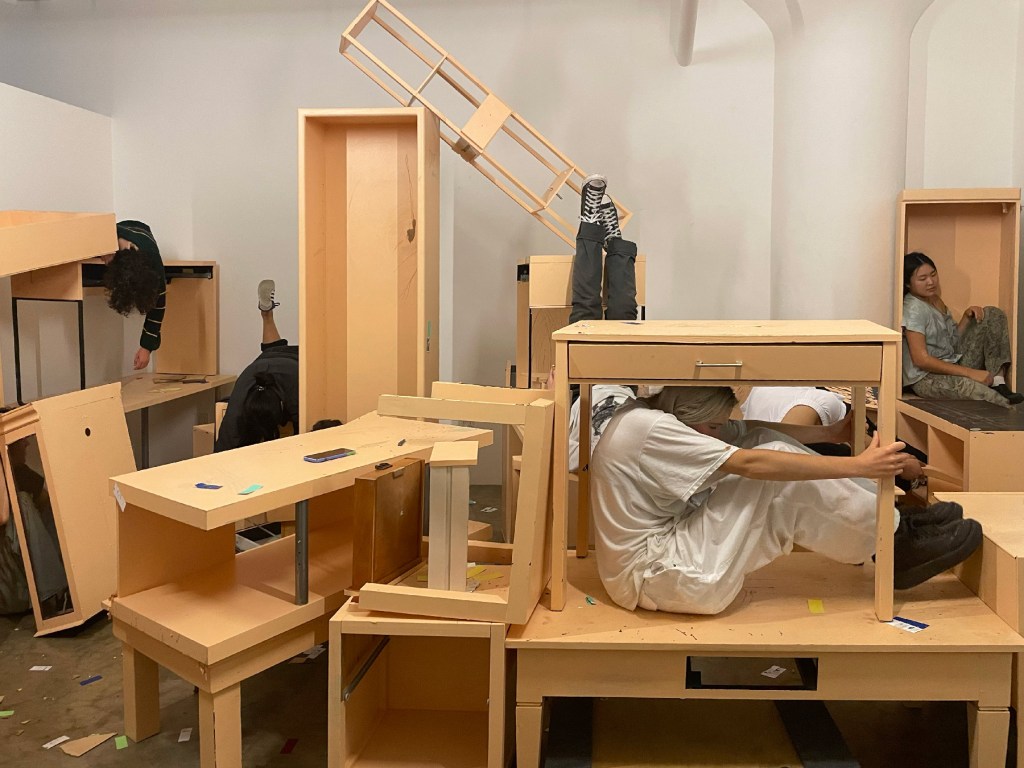
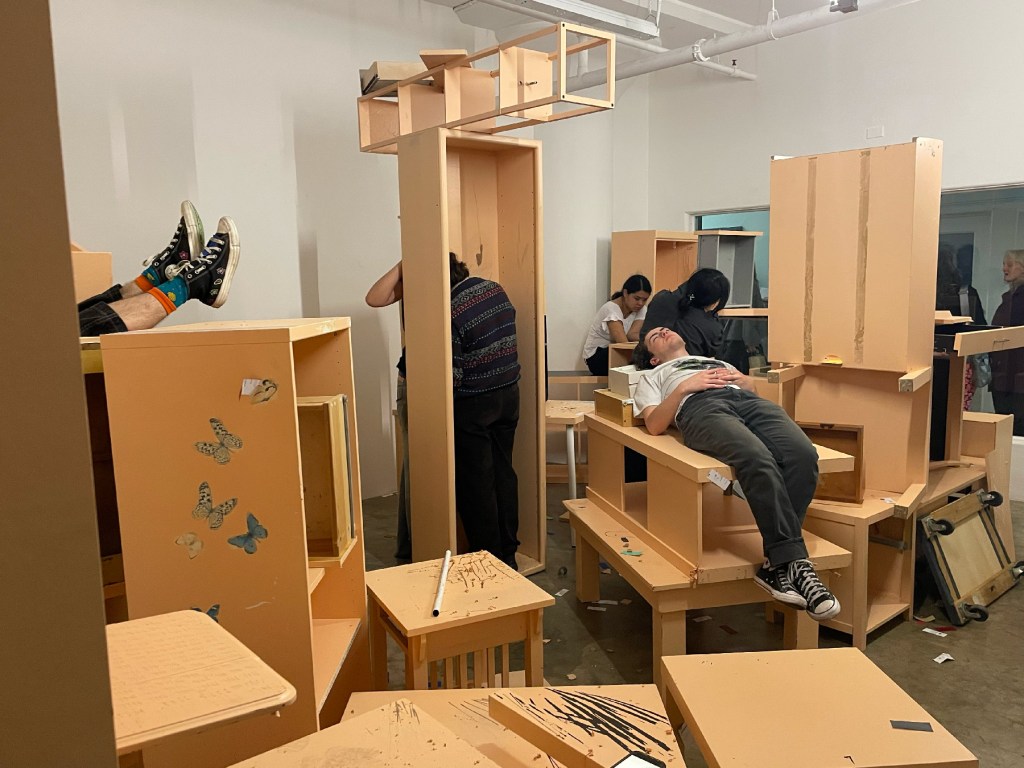
“Power of the Powerless” considers social and political consequences of ‘design-by-unit’ furniture created to allow for affordable, functional, and disposable convenience. The furniture collected from the streets of Los Angeles contends with questions of how standardizations reflect on the interior lives of individuals who experience a hyper-mobile, boundaryless, post-freedom construct of home. Pantone’s color of the year for 2024 was 13-1023 Peach Fuzz, described as creating “energy and optimism” in any space. This shows a colorist schematic embedded in standards of prescribed taste, part of the ecology of home displaced into units and categories. The title refers to a writing by Czech playwright and reluctant politician Václav Havel, addressing the possibility of dissent in a social paradigm where individuals contribute to a post-totalitarian machine.
What does dissent mean now? How can dissent be recognized in oneself? How dissent be recognized or played out in a culture of portable personhood, ambient ideoscapes, distanced intimacy, effect networks, viral samzidat, post-journalistic bewilderment, interiorized imperialism, immuno-political collapse, subcitizenry and ubercitizenry, insidious anti-literacy, technocosmic fragilities, neuromotor seismic-flux responses, pharmeceutical mind fragmentations, autocratic cybernetics and swarm-robotics, among so many other contemporary factors?
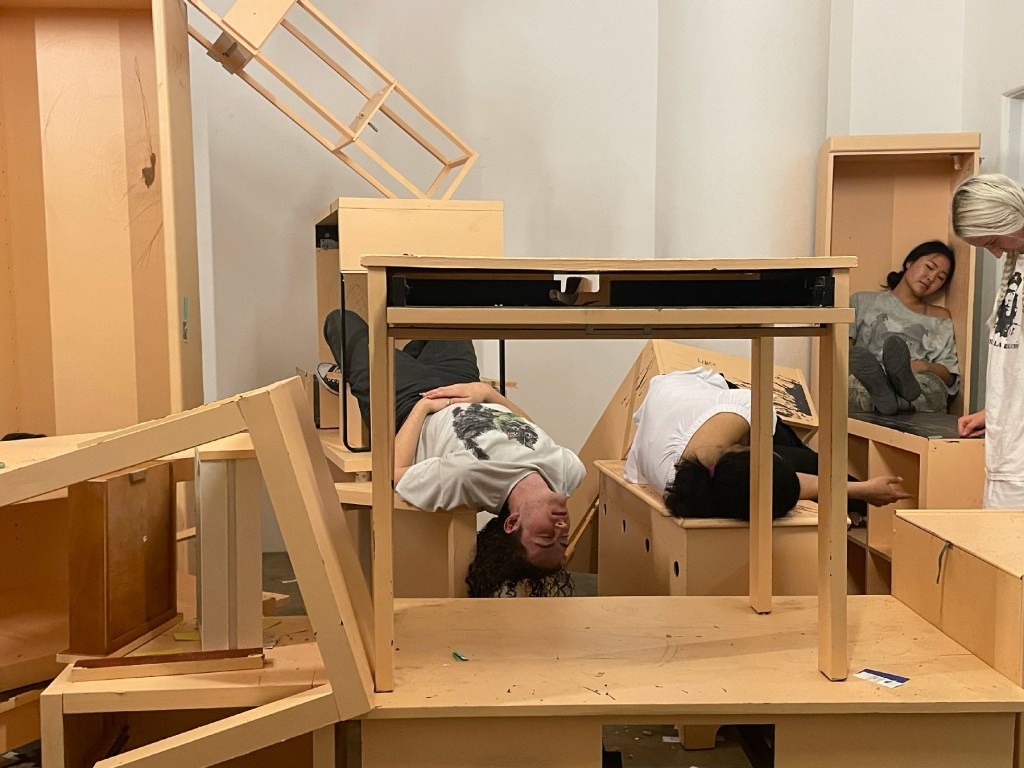
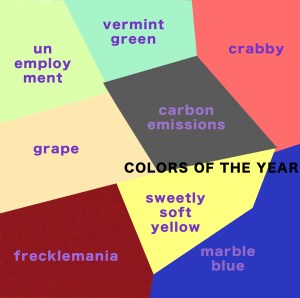
In this durational performance, participants were asked to make and find comfortable places to rest, and to desecrate the colored veneer of the painted furniture surface. They were given agency to move and dismantle furniture, as well as take breaks or walk away at any point. They are movers and breakers. They each came up with their own color of the year. Small swatches of each of these colors of the year can be seen scattered throughout the space by performers.
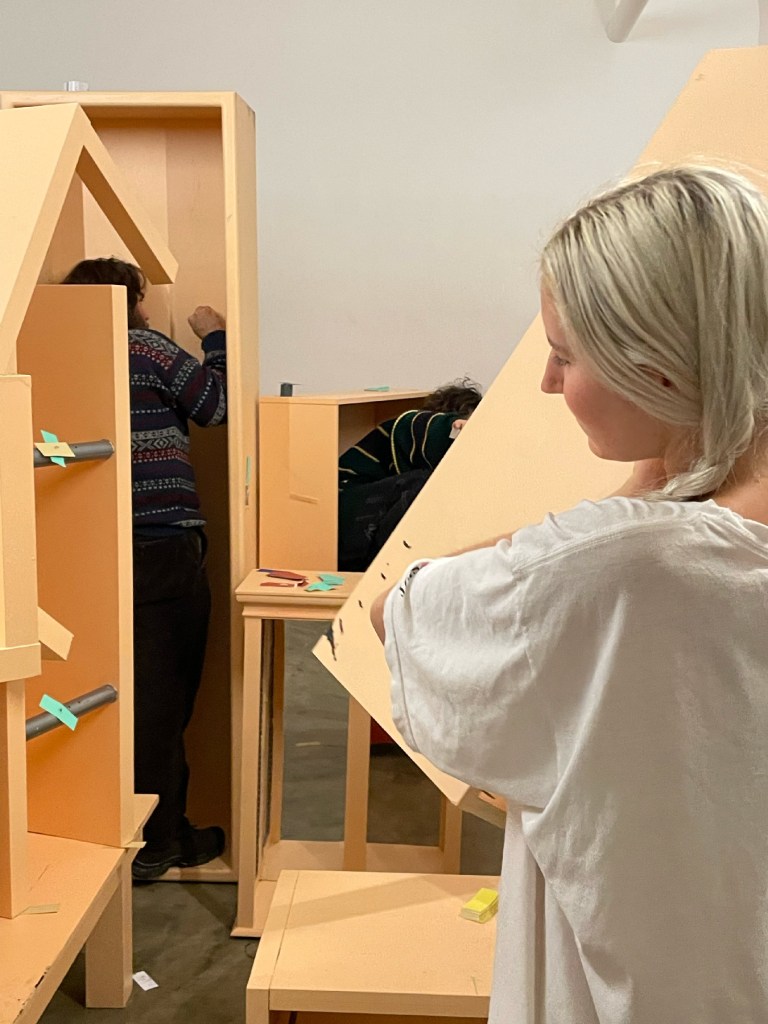
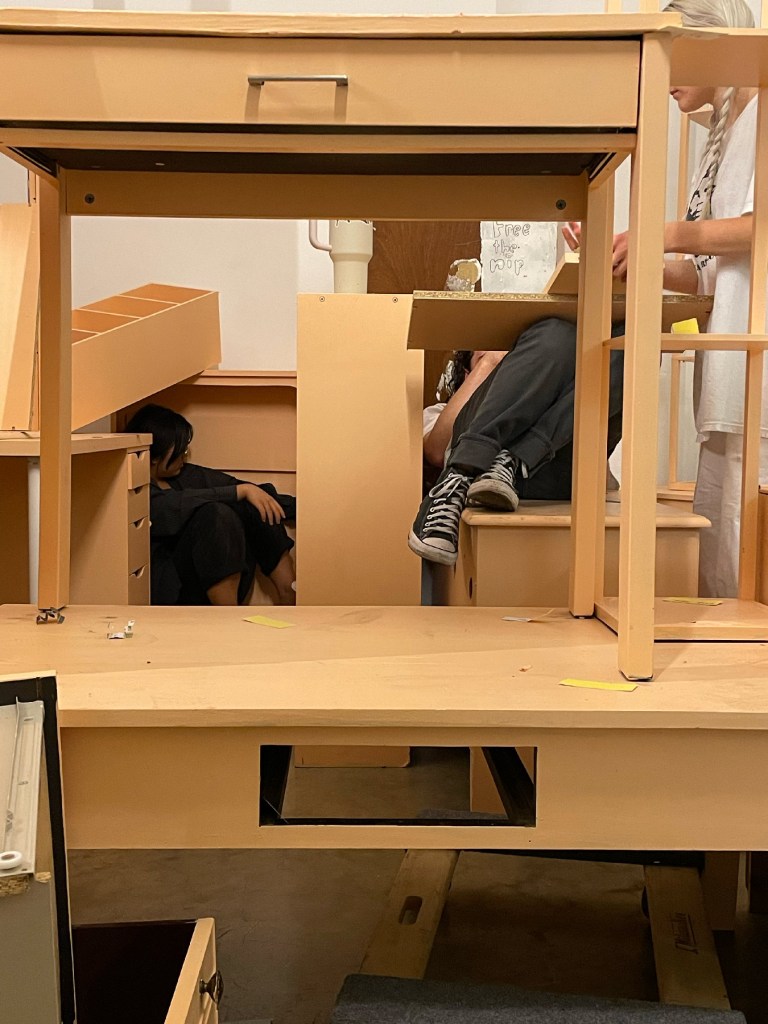
The reference in this work to Václav Havel within an architecture of dissent came about over personal inquiries I’ve had around my family’s history in a 20th century fascist Europe. I’ve always been curious about my distant and truncated relationship to Czech’s in Eastern Europe. I grew up hearing Czech, yet have been estranged from the reasons my family left Czechoslovakia, even if I have knowledge of some of the specifics, and can make assumptions based on the time period of immigration and an echoed story of a widowed Great-Grandmother with children, whose husband was a deceased coal miner. Even so, I feel a curious kinship, a distant empathy with the political specters and hauntings of this and other Eastern European countries even through a mostly silent and vacant bond. And now a similar historical haunting is globally pressing down, or hanging above ……
A specter is haunting Eastern Europe: the specter of what in the West is called “dissent.” This specter has not appeared out of thin air. It is a natural and inevitable consequence of the present historical phase of the system it is haunting. It was born at a time when this system, for a thousand reasons, can no longer base itself on the unadulterated, brutal, and arbitrary application of power, eliminating all expressions of nonconformity. What is more, the system has become so ossified politically that there is practically no way for such nonconformity to be implemented within its official structures.
Who are these so-called dissidents? Where does their point of view come from, and what importance does it have? What is the significance of the “independent initiatives” in which “dissidents” collaborate, and what real chances do such initiatives have of success? Is it appropriate to refer to “dissidents” as an opposition? If so, what exactly is such an opposition within the framework of this system? What does it do? What role does it play in society? What are its hopes and on what are they based? Is it within the power of the “dissidents”-as a category of subcitizen outside the power establishment-to have any influence at all on society and the social system? Can they actually change anything?
I think that an examination of these questions-an examination of the potential of the “powerless”-can only begin with an examination of the nature of power in the circumstances in which these powerless people operate. – Václav Havel (translated by Paul Wilson)
To read more translation of this writing by Václav Havel, please visit Bard’s link here – The Hannah Arendt Center for Politics and Humanities.
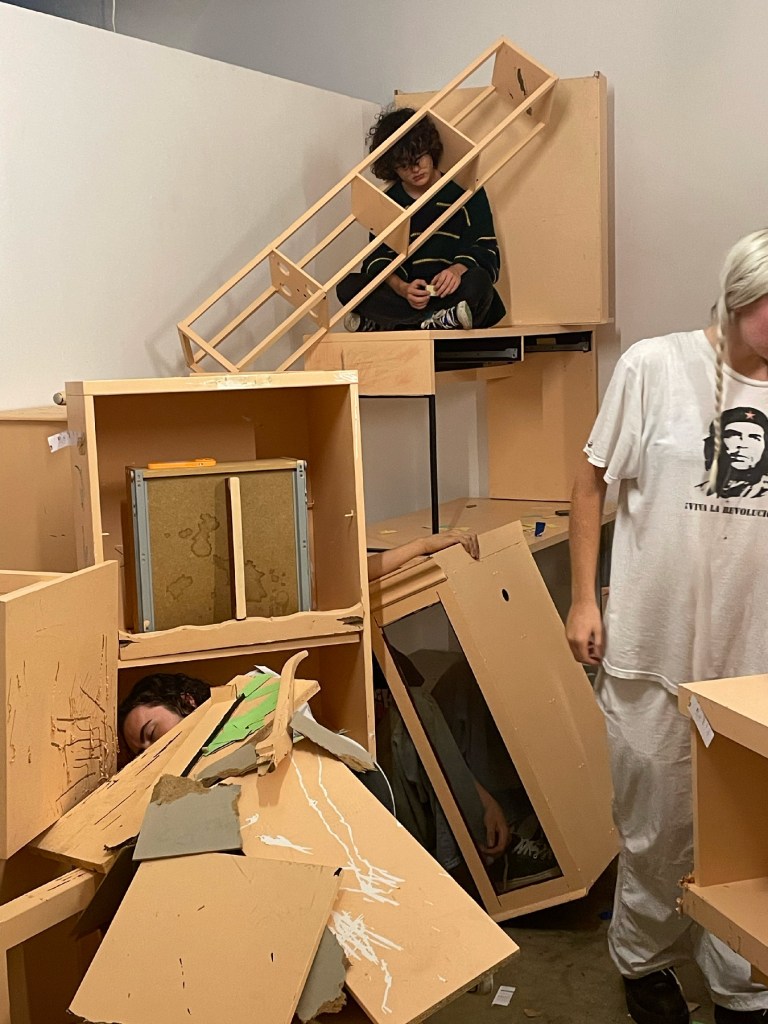
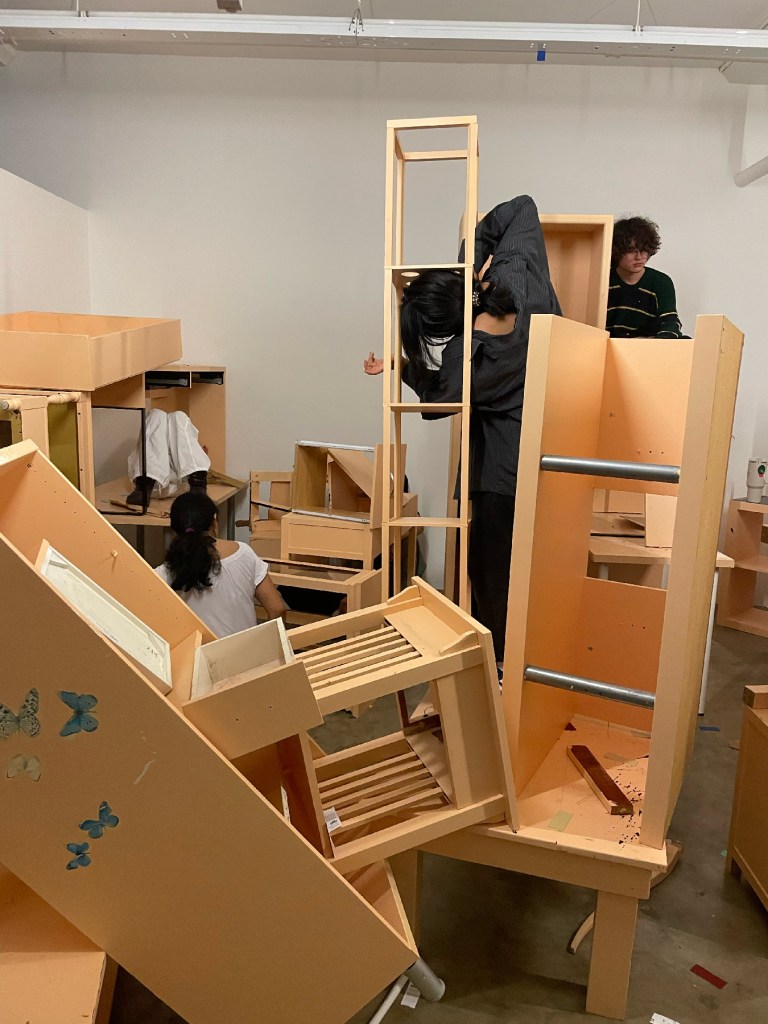
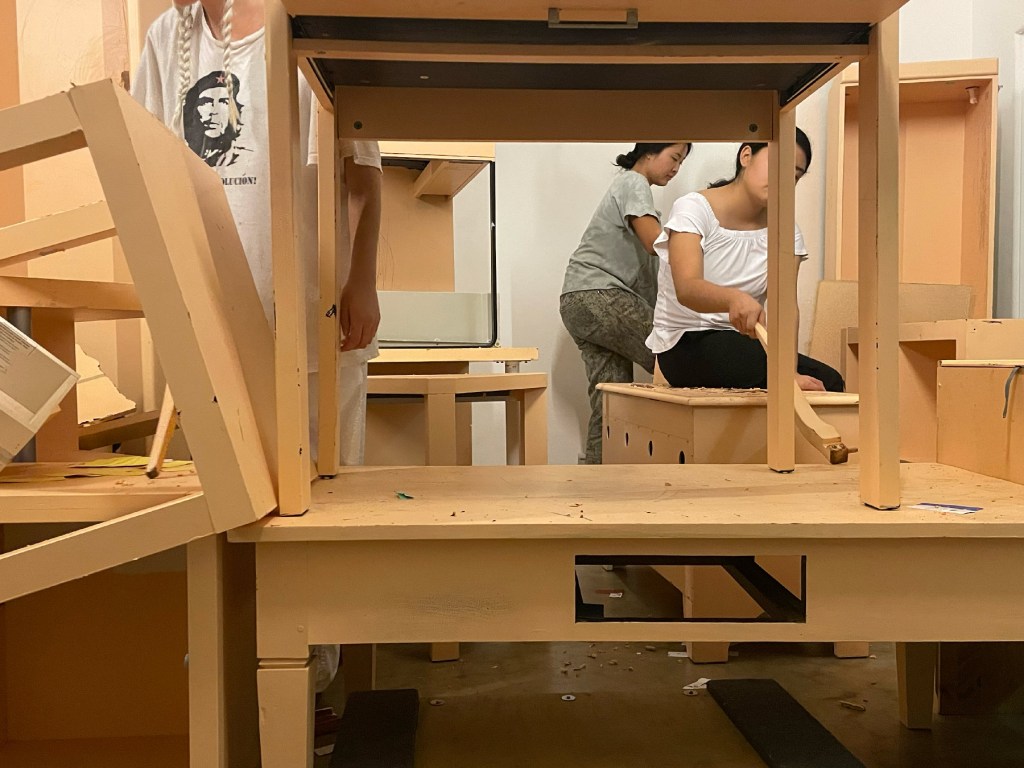
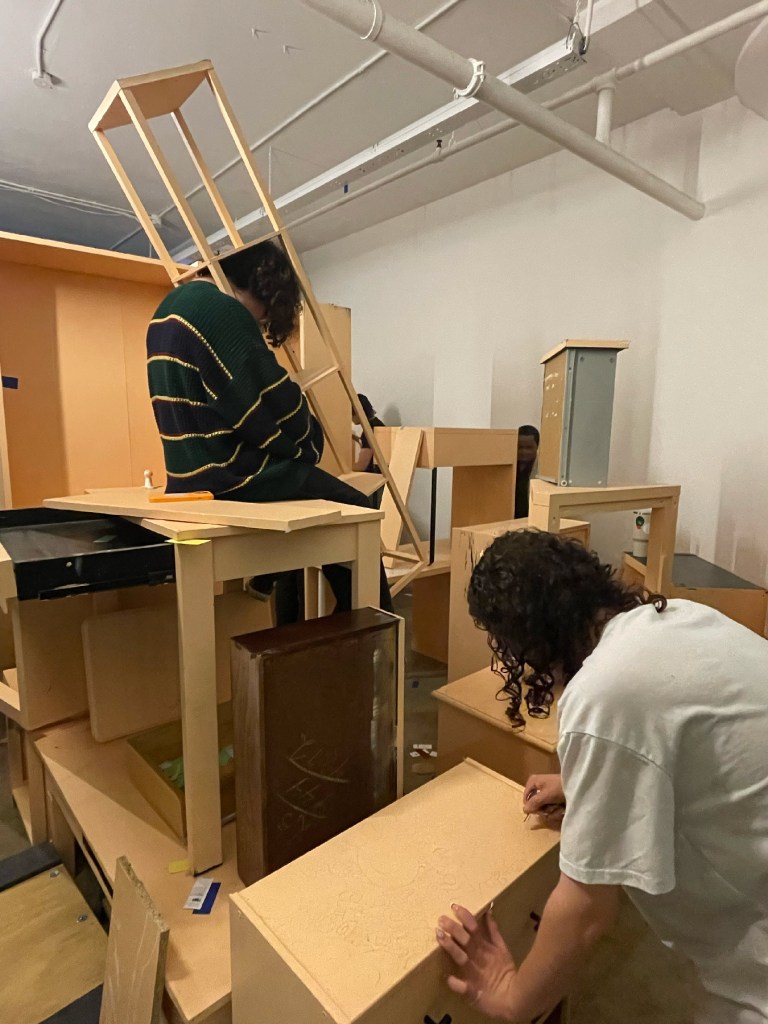
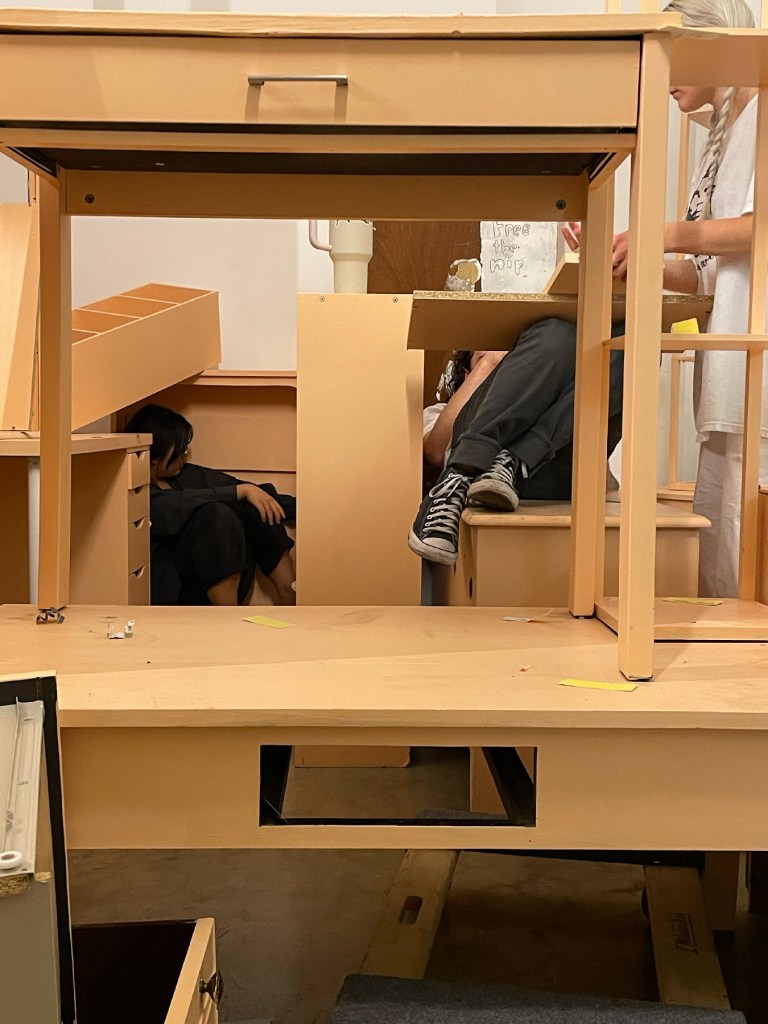
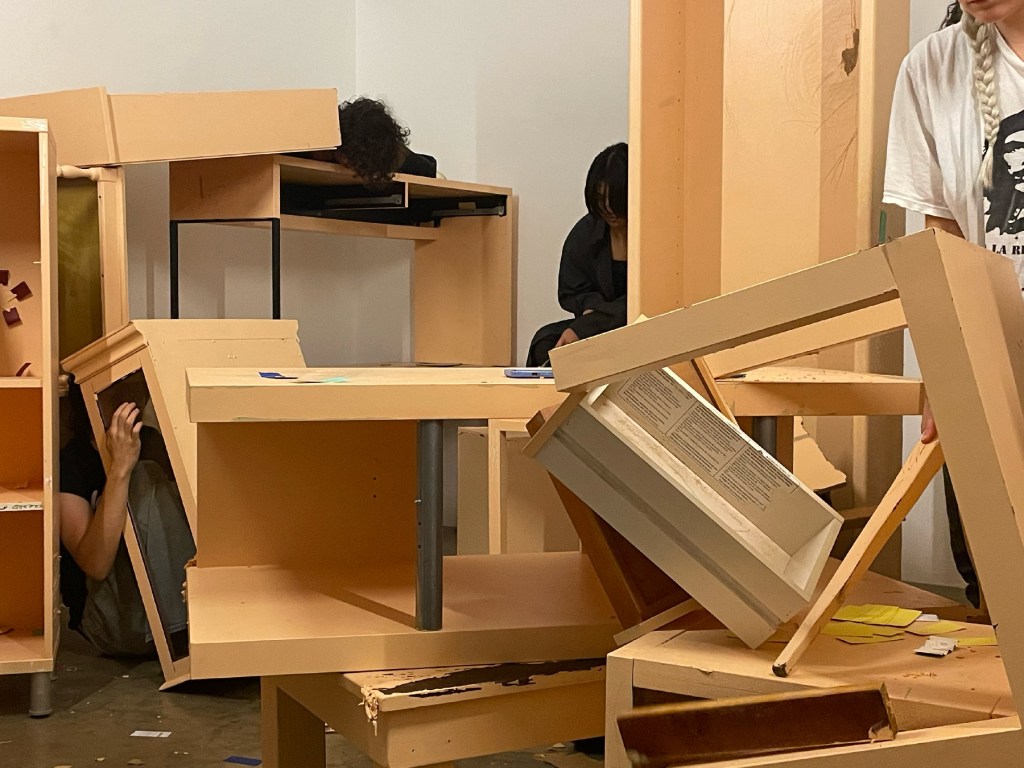
This work was shown as part of Irrational Exhibits 13: Juxtaposing Terrains, curated by Deborah Oliver with Associate Curator/Producer Jerod Thompson. At Monte Vista Projects. A heartfelt thanks to all performers who spent your precious time and joined me in realizing this performance and installation: Anders Little, Bo Kim, Katie Luo, Nicholas Vizzi, Reese Paddock, Zach Sullivan, Valeria Evereth, and Loosh Albetta. This work was made possible through support from Irrational Exhibits and funding from the Pollock-Krasner Foundation Artist Grant. Thank you!
 Kim Zumpfe